
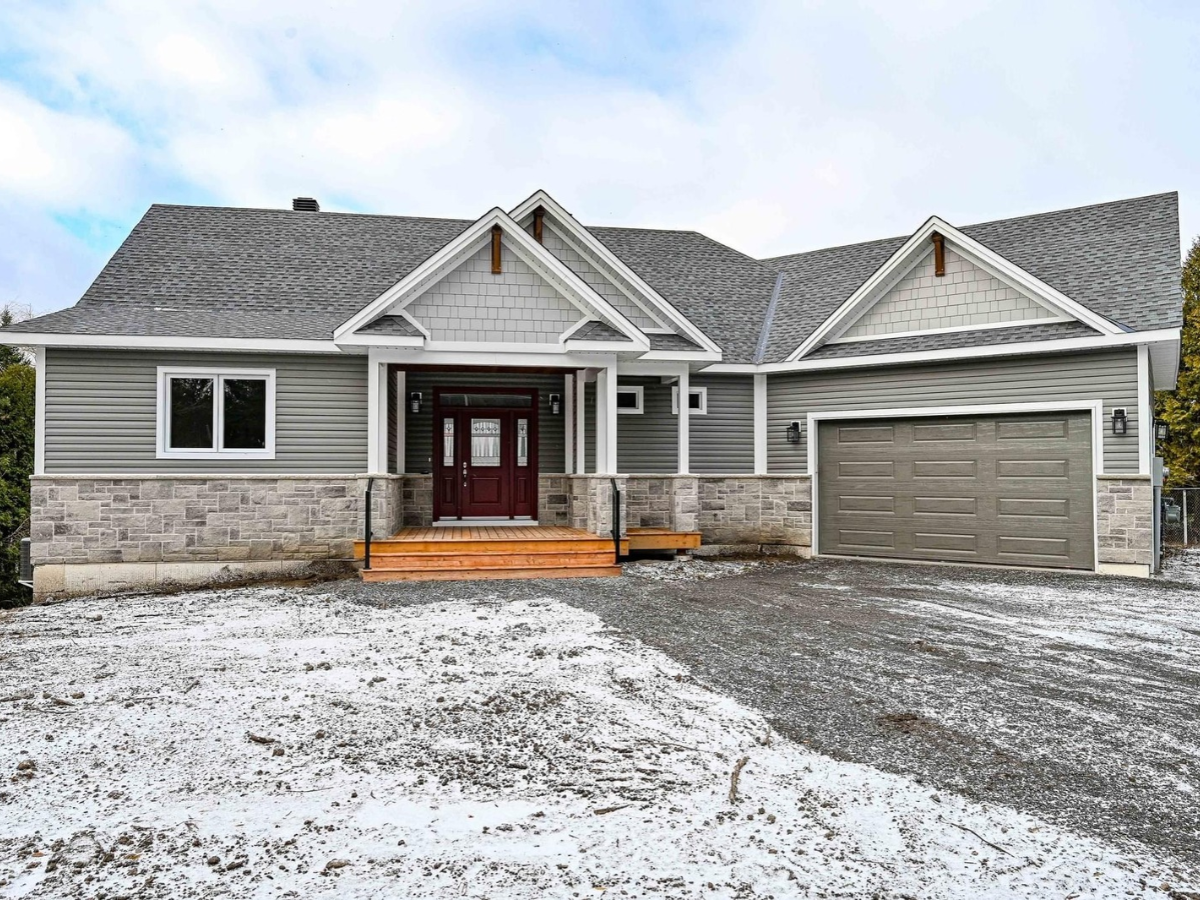
Overview
- Typical lifespans are about 15 to 20 years for three-tab shingles and 25 to 35 years for architectural shingles, and Ottawa’s climate often pushes real-world results toward the lower end.
- Freeze-thaw cycling, ice dams, heavy snow, wind and poor attic ventilation are what wear shingles out early.
- Granule loss that exposes the black asphalt, curling, cracking and missing tabs are the clearest signs of the end of life.
- Ontario’s Building Code sets rules for eave protection, ventilation and minimum roof slope, and a like-for-like shingle replacement is exempt from a City of Ottawa building permit.
- A full tear-off is the best way to find hidden damage, and installation quality has a big effect on how long the new roof lasts.
Introduction
The lifespan printed on a bundle of shingles is a best-case number. It assumes a good installation, a well-ventilated attic and moderate weather. Ottawa does not always cooperate. Winters are long, temperatures swing back and forth across freezing, and the snow stays for months.
That is why homeowners here often hear a different answer from a roofer than from a brochure. Roofing Ottawa homeowners install today may be rated for decades, but how many of those years you actually get depends on the type of shingle, how well the roof is built and ventilated, and how it is looked after.
This guide covers realistic lifespans for each type of asphalt shingle, what wears them out faster in our climate, the signs that replacement is near, the code and city rules that apply, and what a proper replacement involves. If you want to understand the price side first, read our Ottawa roof cost guide.
How long each type of shingle lasts
Asphalt shingles come in three broad grades, and the grade sets the starting point for lifespan.
- Three-tab shingles are the entry level, with a single layer of fiberglass mat. Under normal conditions they last about 15 to 20 years.
- Architectural (laminated) shingles bond two or more layers together, which adds weight, wind resistance and durability. These are the standard choice today and typically last 25 to 35 years.
- Premium designer shingles have more asphalt and mass, and can reach 30 to 50 years in ideal conditions.
These are typical industry ranges, not guarantees. A “lifetime” warranty is a statement about manufacturing defects, often prorated after the first years, not a promise that the roof will last that long. In a climate like ours, a roof usually lands in the lower half of its range, especially if the attic is poorly ventilated or the installation was rushed.
If you are weighing a longer-lasting material at replacement time, our guide to metal vs asphalt roofing for Canadian homes compares the two, and homeowners looking into metal roofing Ottawa options will find the cost and payback side in our guide to the benefits of a standing seam metal roof.
What shortens shingle life in Ottawa
Freeze-thaw and thermal cycling
Ottawa sees roughly 4,500 heating degree-days a year, which is a long, cold heating season, and temperatures cross the freezing mark many times through it. Asphalt contracts in the cold and expands as it warms, and over the years that movement stresses the shingle. As shingles age they get stiffer and lose tear strength, which makes them more likely to crack in the cold. The National Research Council has studied this in aged asphalt shingles and climate-dependent durability.
Ice dams and snow
When heat escapes into the attic, snow on the roof melts and refreezes at the eaves. The ice can lift shingle edges, and the water behind it can find its way into tiny cracks, which speeds up granule loss. Once granules wear away, ultraviolet light attacks the exposed asphalt in summer. Our article on Ottawa attic insulation and heat loss explains the cause.
Attic ventilation
A hot, humid attic cooks shingles from below and traps moisture in winter. Many homes built in the 1980s and 1990s, especially in the suburbs, were built with less ventilation than the code now requires. Our article on how a ridge vent extends roof life shows why airflow matters so much.
Wind and exposure
Homes in open areas around Kemptville, Manotick and Winchester have less shelter from wind, so shingles there are more likely to lift and lose tabs, particularly when they were nailed poorly or the sealant strips have aged. Nail placement and the right number of nails make a real difference to how a roof performs in a storm.
Signs your shingles are near the end
Most of these can be checked from the ground, with binoculars if needed.
- Granule loss. A few granules in the eavestroughs, especially in the first year, are normal. Bare patches that show the black asphalt are not.
- Curling, cupping or fish-mouthing. Edges turn up, centres dip, and shingles stop lying flat.
- Cracks and splits. Horizontal or vertical cracks across the shingle body, common after hard winters.
- Missing or torn tabs. Dark rectangular patches where wind has sheared off pieces.
- Stiff, brittle shingles. When they snap instead of bending, they no longer seal reliably.
- Recurring ice dams or ceiling stains. Repeated leaks point to a roof that can no longer cope, or to an attic problem that needs fixing at the same time.
- Frost, mould or damp wood in the attic. Look from the hatch without stepping inside.
A roof inspection Ottawa homeowners schedule around the 15-year mark can tell you how much life is left before a small problem turns into a leak. When several of these signs appear together, it is time to plan a replacement. Our list of 6 signs you need a new roof goes into more detail.
Code and city rules that apply
Residential roofing in Ontario falls under Part 9 of the Ontario Building Code. Here are the parts that matter most for shingles.
- Eave protection. Article 9.26.5.1 calls for a self-adhering membrane along the eaves on shingle roofs, running at least 900 mm (about 3 feet) up the slope and reaching at least 300 mm (about 1 foot) inside the inner face of the exterior wall, with some exceptions such as unheated structures. On homes with deep overhangs and thick walls, a single 900 mm roll may not reach that line, so a second course can be needed. Confirm the details for your roof with your contractor.
- Minimum slope. Standard shingle application needs a slope of at least 1 in 3 (a 4:12 pitch). Lower slopes, down to 1 in 6, need extra waterproofing such as double underlayment or full-deck membrane. Roofs flatter than that, including the membrane systems found in commercial flat roofing Ottawa buildings, need a different roofing system altogether. Our guide to flat roof replacement explains the options.
- Ventilation. The open vent area should be at least 1/300 of the insulated ceiling area, with intake at the soffits and exhaust near the ridge. Low-slope roofs and cathedral ceilings have stricter ratios.
- Standards. Asphalt shingles sold in Canada are made to the CSA A123.5 standard.
On the municipal side, the City of Ottawa lists installing asphalt shingles on a roof as a project that does not require a building permit, as long as there are no structural changes. That does not exempt the work from the code. Structural repairs, new dormers or skylights, and a switch to much heavier materials can trigger a permit, and heritage-designated properties need a heritage permit for changes to the exterior. Our article on whether you need a building permit to replace a roof in Ottawa walks through each case.
What a proper replacement involves
A replacement that lasts follows a set order. Our guide to how long a roof replacement takes covers the timeline. The key stages are:
- Site preparation. The crew protects landscaping and decks, positions a bin and sets up fall protection. If a fence or gate blocks access, a panel may need to come off for a day, and fence contractors Ottawa homeowners hire can put it back properly afterwards.
- Tear-off. All old shingles, underlayment and tired flashing come off, down to the bare deck.
- Deck inspection. The sheathing is checked for soft spots, rot and delamination, especially near the eaves where ice dams have sat. Damaged boards are replaced.
- Eave protection. The waterproof membrane goes on along the eaves, and often in valleys and around chimneys, skylights and vent pipes.
- Underlayment. A synthetic or felt layer covers the rest of the deck, lapped to shed water.
- Flashing and drip edge. Metal edging and new step and counter flashing are installed where the roof meets walls, chimneys and dormers.
- Shingles. A starter strip goes down first, then the field shingles, fastened with the correct number of nails. Four per shingle is standard. Six are used on steep slopes and in high-wind areas, and some high-wind warranties require them.
- Ventilation. Exhaust vents at the ridge are balanced with intake at the soffits.
- Clean-up. A magnet sweep recovers loose nails, and the debris goes to an approved disposal site, since shingles cannot go out with curbside collection.
Common mistakes and myths
A few of these show up on many roof replacement Ottawa projects, and they shorten how long the new roof lasts.
- “A second layer of shingles saves money.” Overlaying adds weight, hides the condition of the deck, traps moisture and can complicate the manufacturer’s warranty. Some codes allow it under certain conditions, but a full tear-off is the safer choice for a long-lasting roof.
- Shortchanging the eave membrane. A single roll that does not reach the required line inside the wall leaves a gap where ice dam water can get in.
- “More vents are better.” Mixing different kinds of exhaust vents, such as a ridge vent with box vents, can short-circuit the airflow so the lower attic stays stagnant. Balanced intake and exhaust works better.
- “Granule loss means replace now.” Some loose granules in the gutters, especially in the first year, are normal. It is bald patches that signal the end of life.
- “Ice dams mean a bad roof.” Ice dams point to heat loss and weak air sealing in the attic. A good roof helps limit the damage, but the cause is inside the house.
- Venting exhaust fans into the attic. Moist air from bathrooms and dryers should go outdoors, not into the roof space, where it forms frost and rots the deck.
Frequently asked questions
Does the Ontario Building Code require ice and water shield?
For shingle roofs, the code calls for eave protection along the lower edge of the roof, with a few exceptions such as unheated structures. It must reach 900 mm up the slope and at least 300 mm inside the inner face of the exterior wall.
Do I need a building permit to replace my roof in Ottawa?
Not for a like-for-like shingle replacement with no structural changes. Structural repairs, new dormers or skylights, much heavier materials and heritage designations can change that.
Can I put new shingles over the old ones?
It is sometimes permitted, but it adds weight, hides the deck from inspection, traps moisture and can affect the new warranty. A full tear-off is the better practice.
How much attic ventilation does a roof need?
For a standard attic, the code asks for open vent area of at least 1/300 of the insulated ceiling area, balanced between the soffits and the ridge. Low-slope roofs and cathedral ceilings need more.
How many nails does each shingle need?
Four is standard. Six are used on steep roofs and in high-wind areas, and some high-wind warranties require them. Ask your installer what your shingles and location call for.
What is the lowest slope that works for shingles?
Standard shingle installation needs at least a 4:12 pitch. Between 2:12 and 4:12, extra waterproofing is required. Flatter roofs need a membrane system instead.
Does home insurance cover ice dam damage?
Many policies cover sudden interior water damage from ice dams but not the roof repair itself, and claims can be refused when the damage is judged to come from lack of maintenance. Check your own policy with your broker, or see the Insurance Bureau of Canada’s page on ice and snow.
Should I do the roof before other exterior projects?
Usually, yes. Roofing crews, bins and falling debris are hard on new fences and gardens, so if you are planning fencing installation Ottawa work, schedule it after the roof is finished.
Summary
Asphalt shingles typically last about 15 to 20 years in the three-tab grade and 25 to 35 years in the architectural grade, and Ottawa’s freeze-thaw cycles, ice dams, wind and attic conditions often pull results toward the lower end. Watch for bare granule patches, curling, cracking and missing tabs, and fix attic ventilation and air sealing along with the roof so the next set of shingles reaches its full lifespan.
If your roof is approaching the 20-year mark or showing these signs, call Taylor Roofing at 613-416-6215 or request a quote online.
Helpful resources: