
Overview
- A roof that only leaks in heavy weather is usually being pushed past what it can handle, not failing in ordinary conditions.
- In heavy rain, the usual causes are wind-driven water, pooling on the roof, and worn flashing around chimneys, valleys and skylights.
- In heavy snow, the usual causes are ice dams and attic frost, both of which start with warm indoor air reaching the attic.
- Ontario’s Building Code sets rules for eave protection and attic ventilation, and Ottawa’s property standards by-law expects roofs to stay watertight.
- The lasting fix is often air sealing, insulation and ventilation, not just new shingles.
Introduction
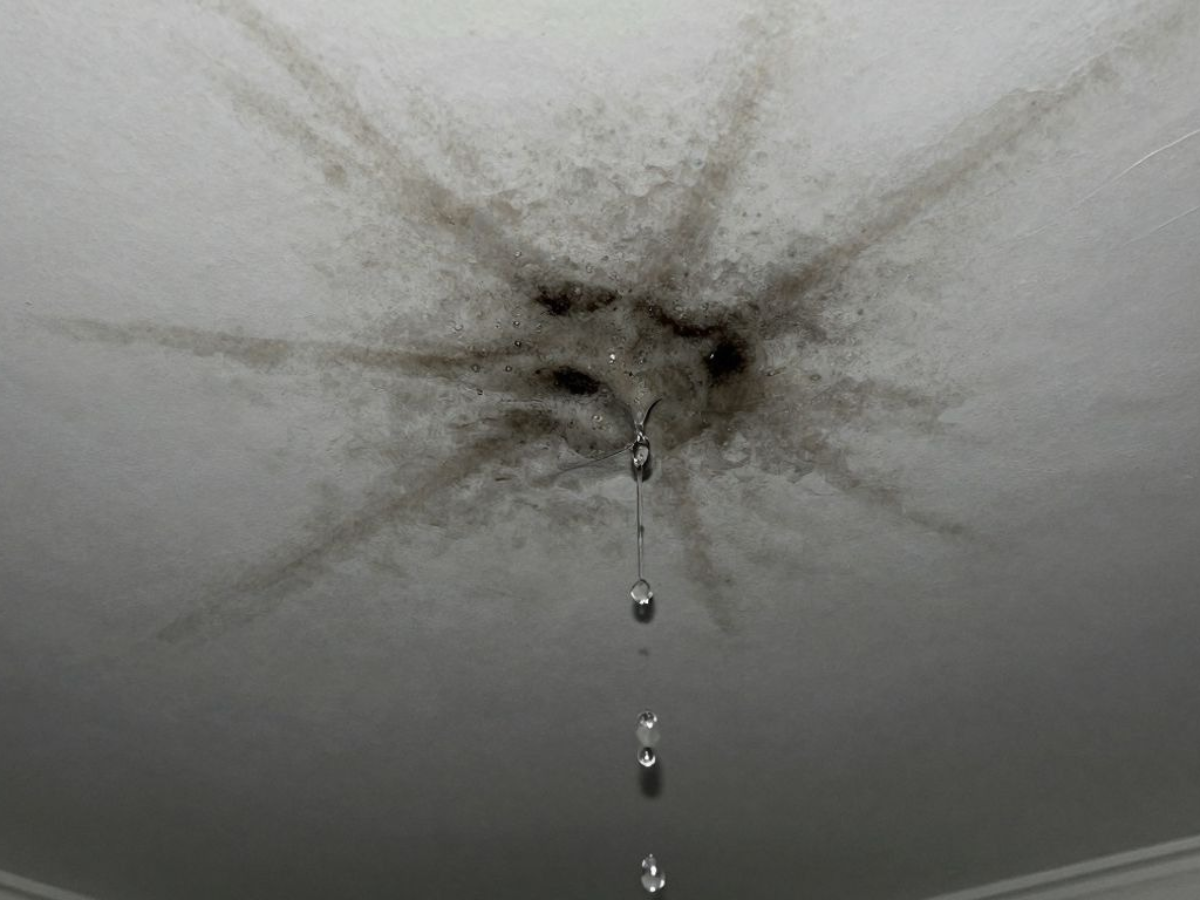
The ceiling stays dry through a light shower, then a storm rolls in or a heavy snowfall settles and a stain appears. It is natural to wonder whether the roof is failing, or whether this is just a one-off. In most cases the answer sits somewhere in between: something small was already wrong, and heavy weather was the first thing strong enough to show it.
Roofing Ottawa homeowners rely on is designed to shed water down a slope using gravity. That works well in ordinary conditions. Wind, deep snow, ice and sudden thaws change how water moves, and they expose weak points that a calm day never will.
This guide explains what is usually happening in heavy rain, in heavy snow and during storms, what is specific to Ottawa’s climate and building rules, what you can safely check from the ground, and when it is time to call a professional. If you are not sure whether you have a leak at all, our guide on how to check for roof leaks is a good place to start.
Why heavy rain and storms find weak spots
Shingles overlap like fish scales so that water running straight down never gets underneath. Heavy rain breaks that assumption in three ways.
- Wind-driven rain. Strong wind pushes water sideways or even up the slope, forcing it under shingle edges and into vents, ridge caps and the metal flashing around chimneys and skylights.
- Volume. A downpour can send water into valleys and eavestroughs faster than they can drain. The water backs up, sits on the roof and finds small gaps, such as an exposed nail head or a lifted shingle, that a light rain would just run past.
- Pressure on the roof itself. During a storm, wind flowing over the roof can lift older, brittle shingles for a moment. Water gets in while they are lifted and the gap closes again when the wind drops, which is why the leak seems to vanish once the weather clears.
Flat and low-slope roofs behave differently because they have little slope to rely on. Garage and addition roofs, and the membrane systems used in commercial flat roofing Ottawa buildings, depend on sealed seams and good drainage, so ponding water and a failing seam are the usual culprits. Our guide to flat roof replacement covers what to look for.
Where storm water usually gets in
The weak points are almost always where the roof changes direction or meets something else. Valleys, the step flashing where a roof meets a wall, the flashing around a brick chimney and the seals around skylights and plumbing vents all take a concentrated flow of water in a storm. Caulking dries out and cracks over the years, and houses move slightly as they settle, so a joint that was tight at installation can open just enough to leak only when the water volume is high.
Why heavy snow causes leaks: ice dams and attic frost
Snow itself rarely leaks through a sound roof. When a leak shows up during or after a snowfall, the cause is usually heat from inside the house. Two mechanisms account for most of these leaks.
Ice dams
Heat that escapes from the living space into the attic warms the roof deck, and that melts the snow sitting on top of it even when it is well below freezing outside. The meltwater runs down the slope until it reaches the eaves. The overhang is not heated by the house, so the water refreezes there and builds into a ridge of ice. More melting follows, the water pools behind the ridge, and because shingles are made to shed water, not hold it, the pool works its way under them, through the nail holes and into the ceiling below.
Ice dams are not caused by the snow or the shingles. They are a sign that the house is losing heat into the attic. Our article on removing roof ice in Ottawa explains safe ways to deal with one that has already formed.
Attic frost
Warm, humid air from cooking, showers and everyday living can leak into a cold attic through gaps around lights, hatches and vent pipes. When it meets the freezing underside of the roof deck, it turns into frost. Over a long cold spell that frost can build up thickly. When the weather warms suddenly, or deep snow insulates the roof and warms the attic, the frost melts at once and rains onto the ceiling. It looks exactly like a roof leak, even though the shingles outside are intact. This is one reason a quick shingle repair sometimes fails to stop a winter leak.
What Ottawa’s climate, the building code and city by-law add
Climate
Ottawa averages roughly 175 cm of snow a year, according to Environment and Climate Change Canada’s climate normals, and some winters bring far more. The temperature also swings above and below freezing again and again through the cold months, which is exactly what ice dams need. The code’s design snow load for Ottawa is around 2.4 kPa, and rain falling on an existing snowpack adds weight because the snow soaks it up. A roof deck that is already damp or soft from earlier leaks copes poorly with that.
Ontario Building Code
Part 9 of the Ontario Building Code covers roofing on houses, and two parts of it bear directly on winter leaks.
- Eave protection. The code calls for a waterproof, self-sealing membrane along the lower edge of the roof, extending at least 900 mm (about 3 feet) up the slope and reaching at least 300 mm (about 1 foot) inside the inner face of the exterior wall. Its job is to keep water that backs up behind an ice dam from getting through the deck. There are exceptions, such as unheated structures, so confirm what applies to your roof.
- Attic ventilation. For a standard attic, the open vent area should be at least 1/300 of the insulated ceiling area, and the openings should be spread between the soffits and the high point of the roof. Steeper requirements apply to low-slope roofs. Our article on how a ridge vent extends roof life explains how that airflow works.
City of Ottawa by-law
The City’s Property Standards By-law expects roofs to be kept watertight and in good repair, and it also addresses hazards such as dangerous buildups of snow and ice. A recurring winter leak is something to deal with sooner, not later.
Different houses, different problems
Older homes in neighbourhoods like the Glebe and Centertown often have dormers and sloped ceilings that leave little room for insulation and airflow, which makes ice dams more likely. Newer homes in Barrhaven, Stittsville and Kanata have roomy attics, but insulation pushed into the eaves can block the soffit vents and cause frost build-up on the underside of the roof deck.
What you can safely check yourself
Most of the useful clues are visible from the ground or from inside the house. There is no need to climb onto an icy roof.
- Look at the snow early in the morning, before the sun hits the roof. If one part of the roof is bare or melting while neighbouring roofs are evenly covered, heat is escaping from the house under that spot.
- Look at the eaves. A few small icicles can be normal. Thick, continuous curtains of ice along the edge suggest an ice dam is forming and water is backing up under the snow.
- Check the windows. Heavy condensation on the inside of windows through the winter means indoor humidity is high, and that same moist air is probably reaching the attic.
- Check the top-floor ceilings. Yellow or brown stains, or rings, especially along exterior walls, point to water collecting above the drywall.
- Look at the side of the house under the eaves. If a fence or shed has been bent or damaged after a thaw, ice sliding off the roof is a likely cause, and fence contractors Ottawa homeowners hire can repair that once the roof edge issue is sorted out.
- If you can see the attic from the access hatch without stepping inside, look for white frost on the nails and the underside of the roof deck, flattened or stained insulation, and dark staining on the wood. Do not walk on the insulation.
Measure from fixed points like an exterior wall or a plumbing stack when you spot a stain, then use that to find the matching spot in the attic. Water often travels along rafters before it drips, so the stain on the ceiling is rarely directly under the entry point.
How these leaks get fixed
The fix depends on the cause. Storm leaks at flashing, valleys and vents are repaired from the outside. Winter leaks usually need work inside the house first, because that is where the problem starts. The usual order is:
- Air seal the ceiling. Gaps around pot lights, plumbing stacks, bathroom fans and the attic hatch are sealed so warm, humid air stops rising into the attic.
- Protect the airflow. Baffles are placed at the eaves so that insulation cannot block the soffit vents, and cold air can move up the underside of the roof deck to the ridge.
- Upgrade the insulation. Attic insulation is topped up to current standards, commonly in the R-50 to R-60 range. Natural Resources Canada’s Keeping the Heat In guide explains why this step matters for ice dams. Our article on Ottawa attic insulation and heat loss covers the local picture.
- Strengthen the roof edge. At the next roof replacement Ottawa homeowners can ask for the eave membrane to go beyond the code minimum, for example through valleys and around chimneys and skylights, as a second line of defence.
- Repair flashing and sealants. Worn step flashing, chimney flashing and vent boots are replaced instead of patched with roofing cement.
If you are planning energy upgrades like these, the City of Ottawa’s Better Homes Ottawa loan program offers financing for eligible retrofits, including attic insulation and air sealing. Terms and eligibility change, so check the program page for current details before you plan around it.
Common myths and mistakes
- “More vents will stop ice dams.” Adding vents to an attic with a leaky ceiling can pull more warm, moist air up from the house. Seal the ceiling first, then balance the ventilation.
- “Ice and water shield prevents ice dams.” The membrane does not stop ice from forming. It stops the water behind the ice from getting through the deck. The cause is still heat loss.
- “My shingles must have failed.” Often they are fine. A winter leak can be melting attic frost, which no amount of re-shingling will fix.
- “Pushing more insulation into the eaves will keep the house warmer.” If it blocks the soffit vents, it can cause frost, moisture and rot on the roof deck.
- “Heat cables solve it.” Cables cut small channels through ice that has already formed, and they use electricity, but they do nothing about the heat escaping from the house. Meltwater can also refreeze lower down.
- “I can chip the ice off.” Hacking at ice dams risks a fall and usually damages the shingles underneath.
When to call a professional
Some of this is a job for a roofer or a building envelope specialist, either because it is unsafe or because it takes specialized tools and training.
- Ice dams. Removing a large ice dam by hand is dangerous and often damages shingles. Professionals use low-pressure steam to cut drainage channels without harming the roof. Never use an axe, hammer or shovel on one.
- Leaks that appear only in wind-driven rain. That points to flashing around a chimney, skylight, wall or valley, which has to be taken apart and rebuilt, not just recalled.
- Frost, black staining or mold in the attic. A thick layer of frost on the nails and sheathing, or dark staining on the wood, means moisture is getting in from the house in large amounts. Air sealing and ventilation need to be put right, and a mold problem needs proper assessment.
- Repeated stains. If a stain comes back after being repaired or painted, the source has not been found.
A roof inspection Ottawa homeowners book after a bad storm or a hard winter is a practical way to catch these problems early, since an inspector can look at the flashing, the roof edge and the attic together. If your roof is also nearing the end of its life, our list of 6 signs you need a new roof can help you decide whether repair or replacement makes sense.
Frequently asked questions
Does home insurance cover ice dam damage?
Many standard policies cover sudden and accidental water damage inside the home, such as stained drywall and damaged flooring, but the roof repair itself is often not covered, and a claim can be refused if the damage is judged to come from long-term lack of maintenance. Policies differ, so check yours with your broker. The Insurance Bureau of Canada explains the basics in Preventing Ice Dams.
Should I put ice and water shield over the whole roof?
The code requires it along the eaves. Extra coverage can help on low slopes, shaded areas and complicated roofs, but it also seals the deck, so the attic needs good ventilation to let the wood dry. Ask your roofer what suits your roof.
Will a metal roof stop ice dams?
No. Metal roofing Ottawa homeowners install sheds snow quickly, and standing seam panels are less likely to let backed-up water through, but ice dams still form if heat is escaping into the attic. Our guide to the benefits of a standing seam metal roof explains what metal does and does not do.
Why does my roof only leak around the chimney?
The chimney interrupts the roof deck, so it needs layered flashing to seal it. Mortar breaks down and sealants age over time, so this joint is among the most common places for a leak during heavy rain.
Can a bathroom fan cause a ceiling leak?
Yes. If a fan vents into the attic instead of outside, it pumps humid air into the cold space, where it freezes as frost and melts later onto the ceiling.
Can wet insulation be saved?
Usually not. Soaked insulation loses much of its insulating value and can grow mold in a dark attic, so it normally needs to be removed and replaced once the leak is fixed.
Can ice from the roof damage my yard or fence?
Yes. Sliding snow and falling ice can bend gutters and fences and damage plants close to the house. If you are planning fencing installation Ottawa work this year, keep new fence lines clear of the spots where ice falls from the eaves.
Summary
A roof that leaks only in heavy weather is telling you where its limits are. In heavy rain, the weak spots are usually flashing, valleys and worn seals. In heavy snow, the cause is usually heat and moisture escaping from the house into the attic, which leads to ice dams and attic frost. Fixing the cause, with air sealing, insulation, ventilation and sound flashing, lasts longer than patching the surface.
If your ceiling is stained, or you would like a professional to look at your roof and attic before the next storm, call Taylor Roofing at 613-416-6215 or request a quote online.
Helpful resources: