
Overview
- Most homes take one to two working days to re-roof. Large, steep or complex roofs can take three days or more.
- Day one is mostly tear-off, deck inspection and waterproofing. Shingles, flashing, ventilation and cleanup finish the job.
- You do not need to be home, but you should stay reachable by phone in case the crew finds hidden damage.
- Weather, roof pitch, the number of valleys and rotted decking are what stretch a schedule.
- Winter installs are possible in Ottawa, but they are slower and need extra steps to seal the shingles.
- Expect noise and vibration all day, so plan ahead for pets, remote work and little ones.
You have approved the quote, the start date is on the calendar, and a quieter question starts to nag: how long will a crew be on top of my house?
It is one of the most common things homeowners ask before a roof replacement, and for good reason. A roof is not something you can cover up halfway. Once the old shingles come off, the house is relying on the crew and the weather to get it sealed up again. Knowing what to expect each day takes a lot of the worry out of the process.
Here is a clear look at how long a roof replacement in Ottawa really takes, what happens on each day, and what can speed up or slow down the job.
How Long Does a Roof Replacement Take?
For a typical single-family home with an asphalt shingle roof, a roof replacement takes one to two full working days. An experienced, well-equipped crew can sometimes finish a small bungalow with a simple gable roof in a single day, while bigger or more complicated homes run longer.
| Type of home or roof |
Typical time on site |
| Small single-storey home, simple gable roof |
About 1 day |
| Average home, 1,500 to 2,500 sq. ft., standard pitch |
1 to 2 days |
| Large home, steep pitch, many valleys or dormers |
3 days or more |
| Any roof with extensive rotted decking |
Add time for deck repairs |
Think of these as a planning guide. The crew can give you a firm schedule once they have measured your roof and seen how it is built.
What Stretches the Schedule
A few things decide whether you land at the short or long end of that range:
- Size and shape. More surface area means more material to move and install. Each valley, dormer and chimney adds cutting and flashing work.
- Pitch. Steep roofs need extra safety rigging, and crews move more slowly on them. Ontario’s construction rules require proper fall protection for work at height, and a good crew never skips it to save time.
- Condition of the deck. Once the old roof is off, the plywood or OSB underneath gets inspected. Soft, damaged or rotted sections have to be replaced before anything new goes on.
- Access. If the driveway is tight and the disposal bin cannot sit close to the house, removing debris takes longer.
- Weather. Rain, snow, high winds and cold can pause the work or add steps. More on that below.
What Happens Before the Crew Arrives
The first hour is about protecting your property. The crew lays tarps over landscaping, decks and fixtures, sets the disposal bin on your driveway and secures safety anchors to the roof framing. Bundles of shingles and rolls of membrane are staged on the roof so the weight is spread out properly.
Day One: Tear-Off and Waterproofing
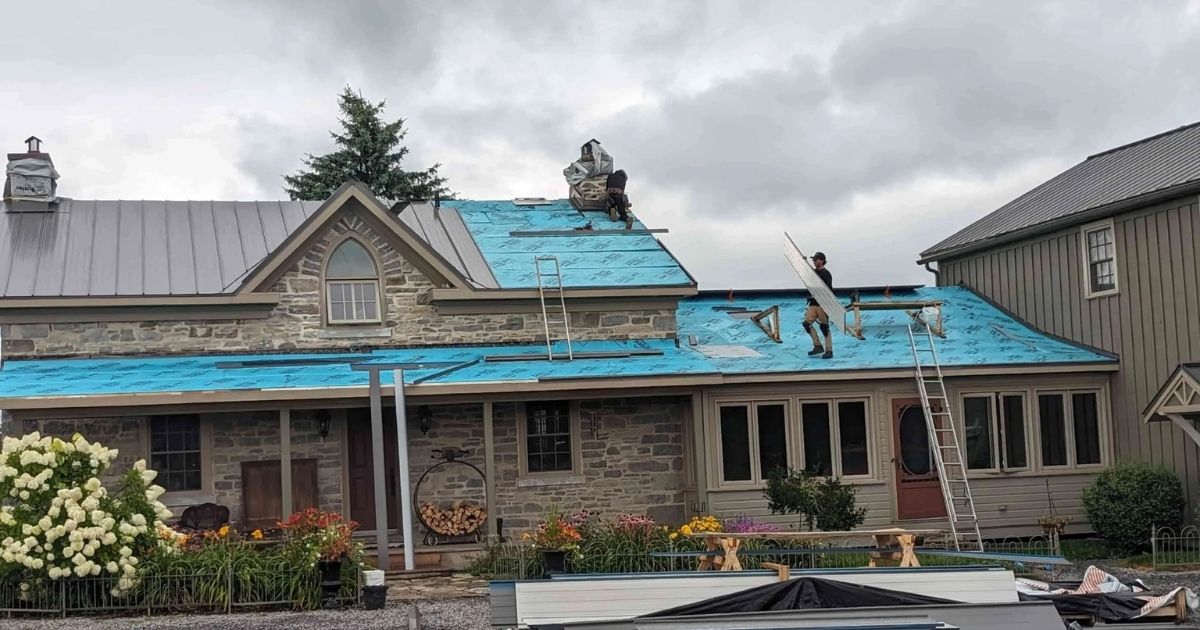
The old shingles, underlayment and worn flashing come off down to the bare wood deck. The crew then walks the deck and checks for moisture damage, delamination or rot, replacing anything that is not solid.
With the deck sound, the waterproofing layers go on. In Ottawa, that starts with ice and water shield along the eaves and in the valleys, followed by synthetic underlayment over the rest of the deck. A metal drip edge is fastened along the edges so water drains into the eavestroughs instead of creeping behind the fascia. Many crews begin laying the first shingle courses late on day one.
Day Two: Shingles, Flashing and Ventilation
The second day is when the roof starts to look new. A starter strip goes along the eaves and rakes to lock the first row of shingles down, and the field shingles are fastened course by course up to the ridge. Metal step flashing is set where the roof meets walls or chimneys, and rubber boots are fitted around plumbing vents.
Near the peak, the crew installs the ridge vent and ridge cap. Good airflow matters just as much as the shingles, which is why we wrote about how a ridge vent extends roof life. Roof ventilation in Ottawa helps keep the deck cold in winter and lets heat escape in summer. Finally, the crew cleans up, sweeping the lawn, gardens and driveway with a magnetic tool to pick up stray nails.
When a Third Day Is Needed
Larger custom homes, roofs with a lot of damaged decking, steep pitches and properties with limited access can push the job to a third day or beyond. If that happens, a reputable crew keeps the roof protected overnight and tells you why the schedule changed. Our guide to proper roof shingle installation explains why rushing the details is never worth it.
Do You Need to Be Home During a Roof Replacement?
No. All of the work happens outside, so nobody has to be inside the house. That said, a few minutes of your time at the right moments makes the day run more smoothly:
- Be there for the first hour if you can. You can confirm where the bin goes, unlock any gates and walk through the plan with the crew lead.
- Stay reachable by phone. Hidden rot under the old shingles is common, and the crew may need your approval to replace damaged decking before the new waterproofing goes down.
- Plan for the noise. Tear-off, pneumatic nail guns and bundles of shingles hitting the roof create constant noise and vibration through the whole house. If you work from home or have pets or a baby, it is often easier to be out for the day.
How Ottawa Weather Affects the Timeline
The calendar matters here as much as the crew does. Our post on weather and roof replacement cost in Ottawa goes deeper, but here is what each season usually means for timing.
- Late spring to early fall. This is the easiest window. Warm sun helps the sealant strip on each shingle bond naturally, and long days give the crew more working hours.
- Rain. Reputable crews only tear off what they can cover and dry in the same day, and they stop when rain moves in. A wet forecast can push the job back a day or two.
- Winter. A roof can be replaced in cold weather, but it moves more slowly. Shingles turn brittle, the sealant strip does not activate without sun, and self-adhering membranes need mild conditions to bond well. Crews often hand-seal each tab with roofing cement to keep the shingles from lifting in winter wind. If your roof is flat, see our guide to winter flat roof replacement.
- Spring melt and freeze-thaw. Wet decks and icy mornings can delay a start, so build a little flexibility into your plans.
The timeline also depends on the work itself. The City of Ottawa does not require a building permit to replace asphalt shingles with the same type of roofing when there are no structural changes. If the crew finds that trusses or large areas of sheathing need replacing, or if you are adding a skylight or dormer, a permit may be required. The City’s page on building permit projects explains where the line sits.
Questions to Ask Your Contractor About the Schedule
When you speak to roofing contractors in Ottawa, a few questions will tell you a lot about how a project will run:
- How many days do you expect the job to take, and what could change that?
- How many people will be on the crew?
- What happens if the weather turns mid-job?
- Where will the disposal bin go, and what happens if it cannot sit on my driveway?
- How will you protect my landscaping and clean up the nails afterward?
- If you find damaged decking, how is it priced and who approves it?
Clear, confident answers are a good sign. Vague ones are worth a second look.
Frequently Asked Questions
Can a roof really be replaced in one day?
Often, yes. A small home with a simple roof shape and good access can be finished in a day by a full crew. Bigger roofs, steep pitches and damaged decking usually take two or three days, and rushing those jobs is how mistakes happen.
What happens if it rains while my roof is being replaced?
A careful crew plans for it. They only open up the sections they can protect with waterproof underlayment the same day, and they stop work when rain arrives. A wet forecast may delay the start, but your home should stay protected throughout.
Why do my new shingles look wavy or not fully flat?
That is normal, especially after a cool-weather install. The shingles need warm sun to soften and activate the sealant strips on their underside. After a few days of sunshine they relax, bond and lie flat.
Do I need a permit to add a skylight during a roof replacement?
Yes. A like-for-like shingle replacement is generally exempt in Ottawa, but cutting a new opening through the roof is a structural change and needs a building permit. If a skylight is on your wish list, bring it up when you request your quote.
Summary
Most Ottawa homes need one to two working days for a full shingle roof replacement, with larger or more complex roofs taking three days or more. The first day centres on tear-off, deck inspection and waterproofing, and the second day brings the shingles, flashing, ventilation and cleanup together. Weather, pitch, access and hidden deck damage are the main reasons a schedule shifts.
You do not have to be home, but staying reachable by phone helps the crew make quick decisions, and a little planning for the noise goes a long way. If you are still sizing up the budget, our roof cost guide for Ottawa is a good next read.
Ready to talk through your own timeline? Request a free quote or call Taylor Roofing at 613-416-6215, and we will explain exactly how long your roof will take and what to expect on each day.